The February deadline, the register, the certificates —
handled like they're one job.
Enter it once. Everything reads it.
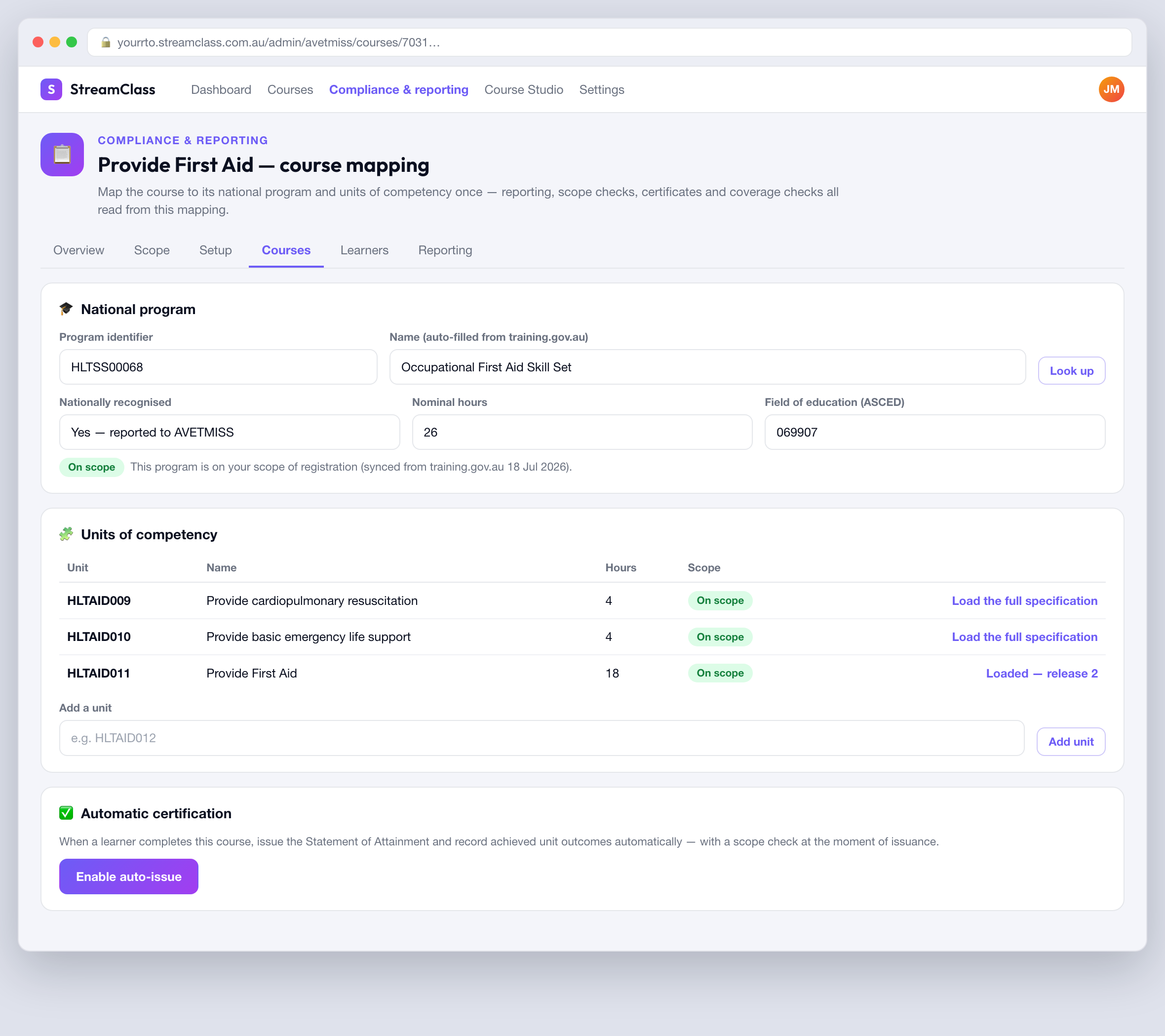
Track a course, look up its national code — the official title and field-of-education fill themselves from training.gov.au, so nothing is re-typed from memory. Add the units of competency and each one shows its scope status, live.
Warn first. Block when you're ready.
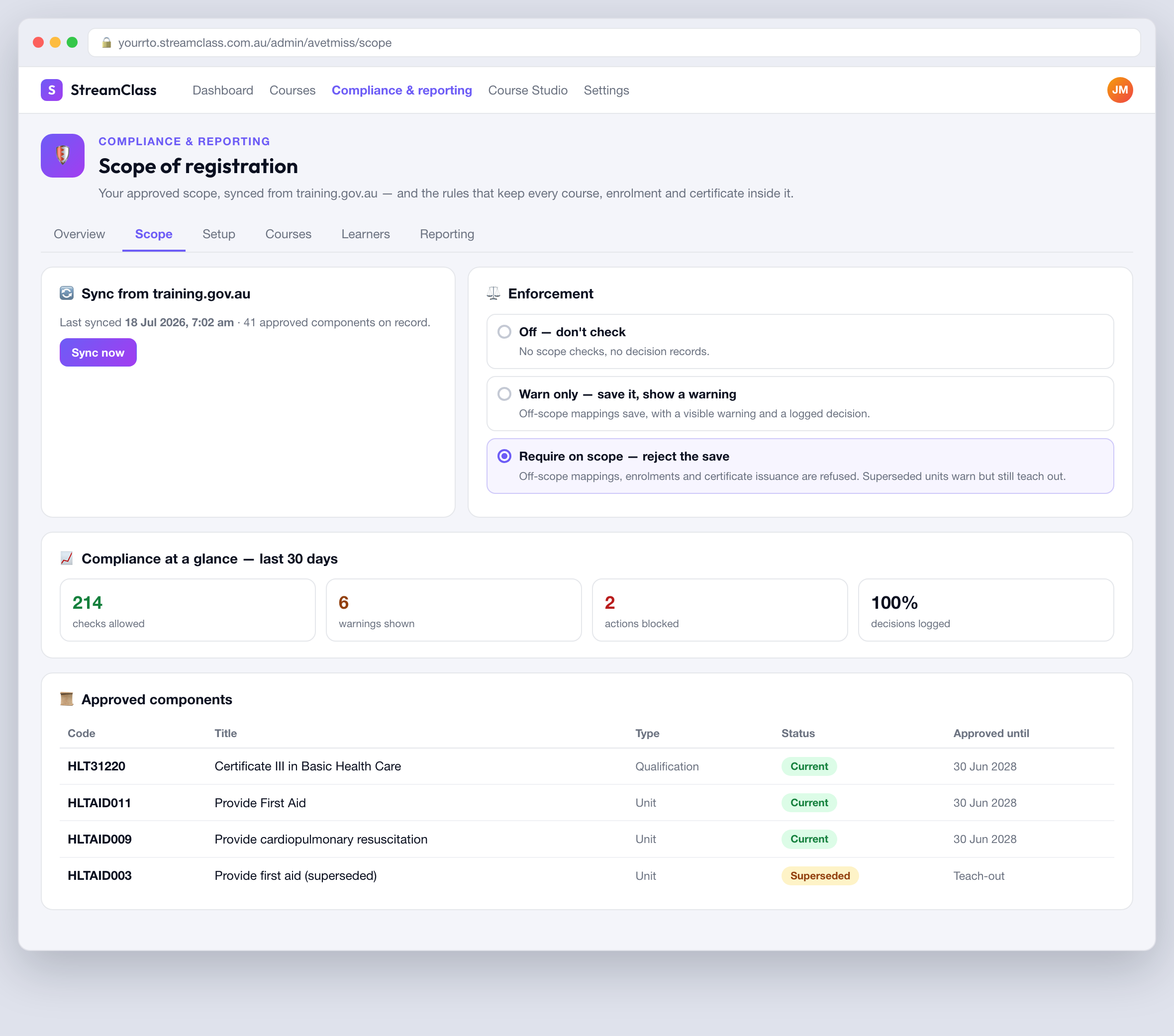
Sync your approved scope from training.gov.au with one click. Start in warn mode and watch what would have slipped through. When you're ready, switch to block mode — and an off-scope course mapping, enrolment or certificate simply cannot happen.
Block mode fails closed, and superseded units warn but still teach out, because teach-out is legitimate delivery.
Findings in July are fixes. Findings in February are a crisis.
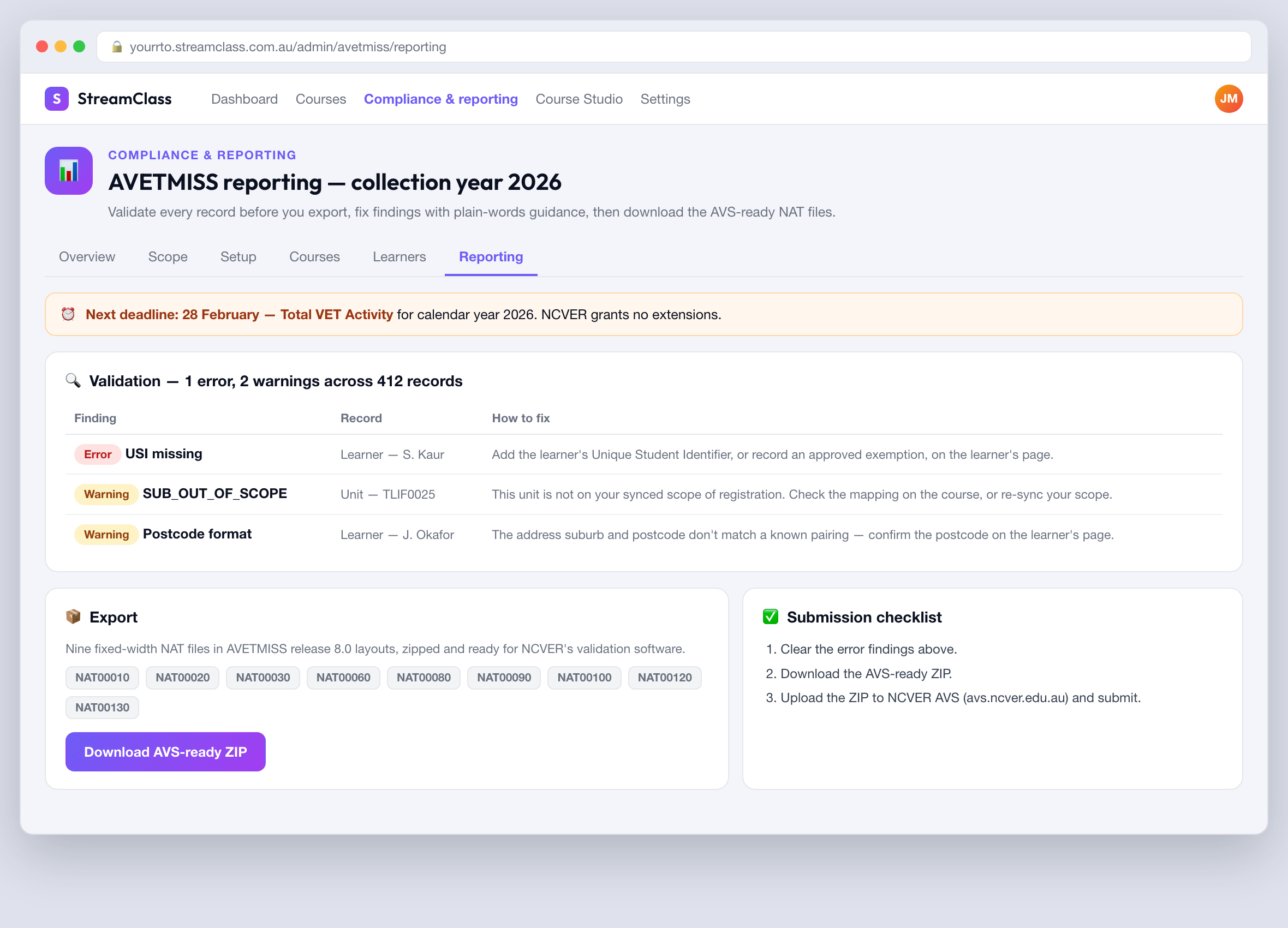
StreamClass validates every learner record the day it's entered — mandatory fields, classification codes, Unique Student Identifier format, cross-field rules — each finding with a plain-English "How to fix" beside it.
When the collection closes, you download the nine national reporting (NAT) files as one ZIP — ready for NCVER's validation software (AVS) — and lodge. The deadline banner counts down to 28 February so nobody has to remember.
Certificates that survive scrutiny
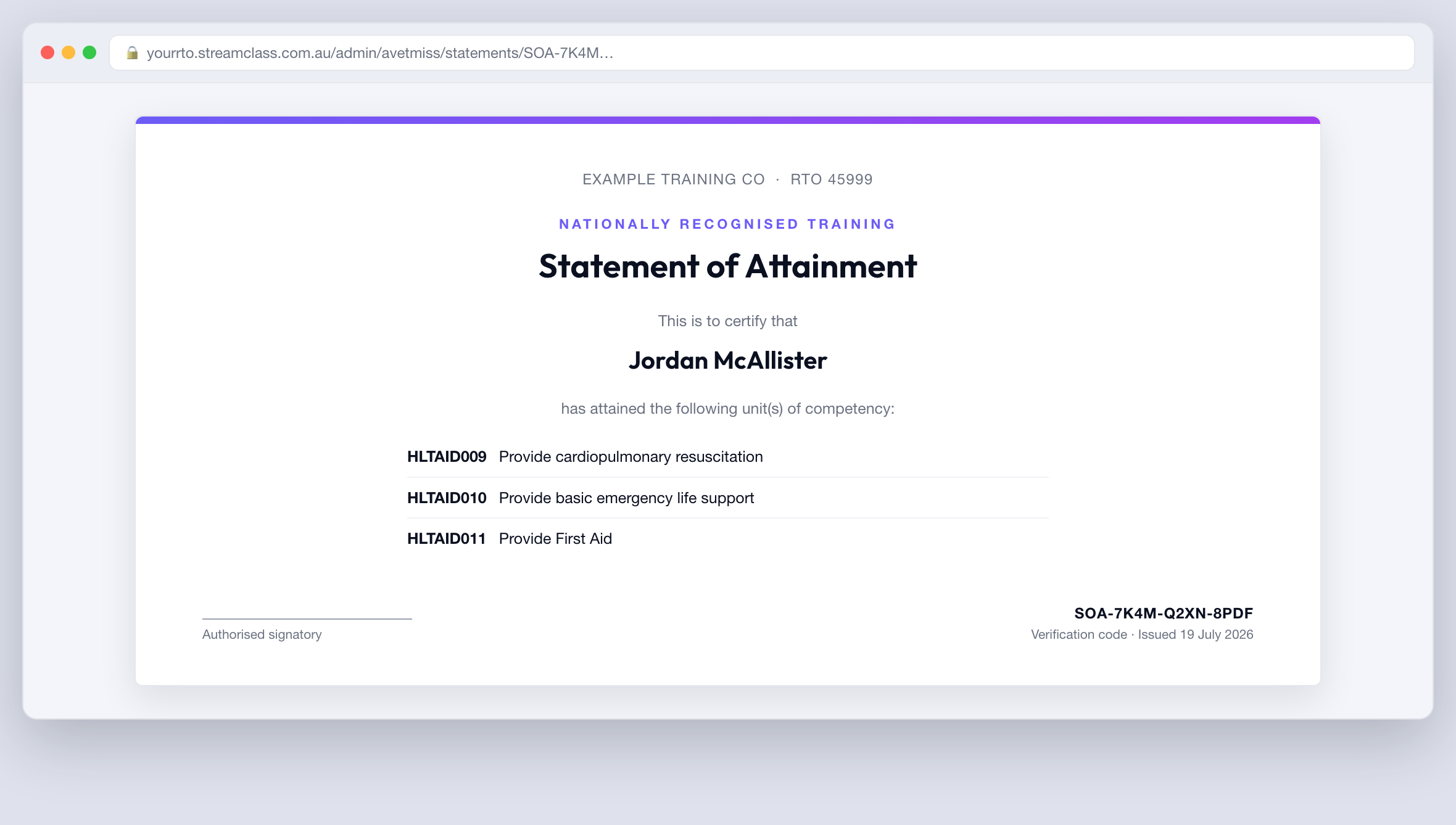
A learner completes; the AQF Statement of Attainment issues itself — unique verification code, a frozen snapshot of the units attained, the correct date in your timezone — with a fail-closed scope check at the moment of issuance.
Certification and reporting can't disagree, because they're the same event.